
Updated March 31, 2026. We rechecked this page against official California sources before revising it. Several claims from the earlier version were removed because we could not verify them directly from current primary-source material.
The narrower but higher-confidence picture is still meaningful: California’s own regulator reported a sharp increase in embargoes and recalls in 2024, and DCC’s current testing-laboratories guidance still centers formal controls around COAs, proficiency testing, and failed-batch handling.
1. What the DCC officially reported
In a February 5, 2025 Department of Cannabis Control announcement, the agency said it issued 481 embargoes in 2024, more than 11 times the total from 2023, and 63 recalls covering 259 products.
- Those figures are official DCC numbers, not third-party estimates.
- They show materially higher product-removal activity than the prior year.
- For buyers and operators, that means compliance history is still a live risk signal, not background noise.
High-confidence takeaway: the official enforcement record shows that recalls and embargoes rose sharply enough in 2024 to justify closer supplier vetting.
The DCC figures do not prove every root cause by themselves, but they do establish that product-removal activity was not minor or isolated.
2. Why testing controls still matter
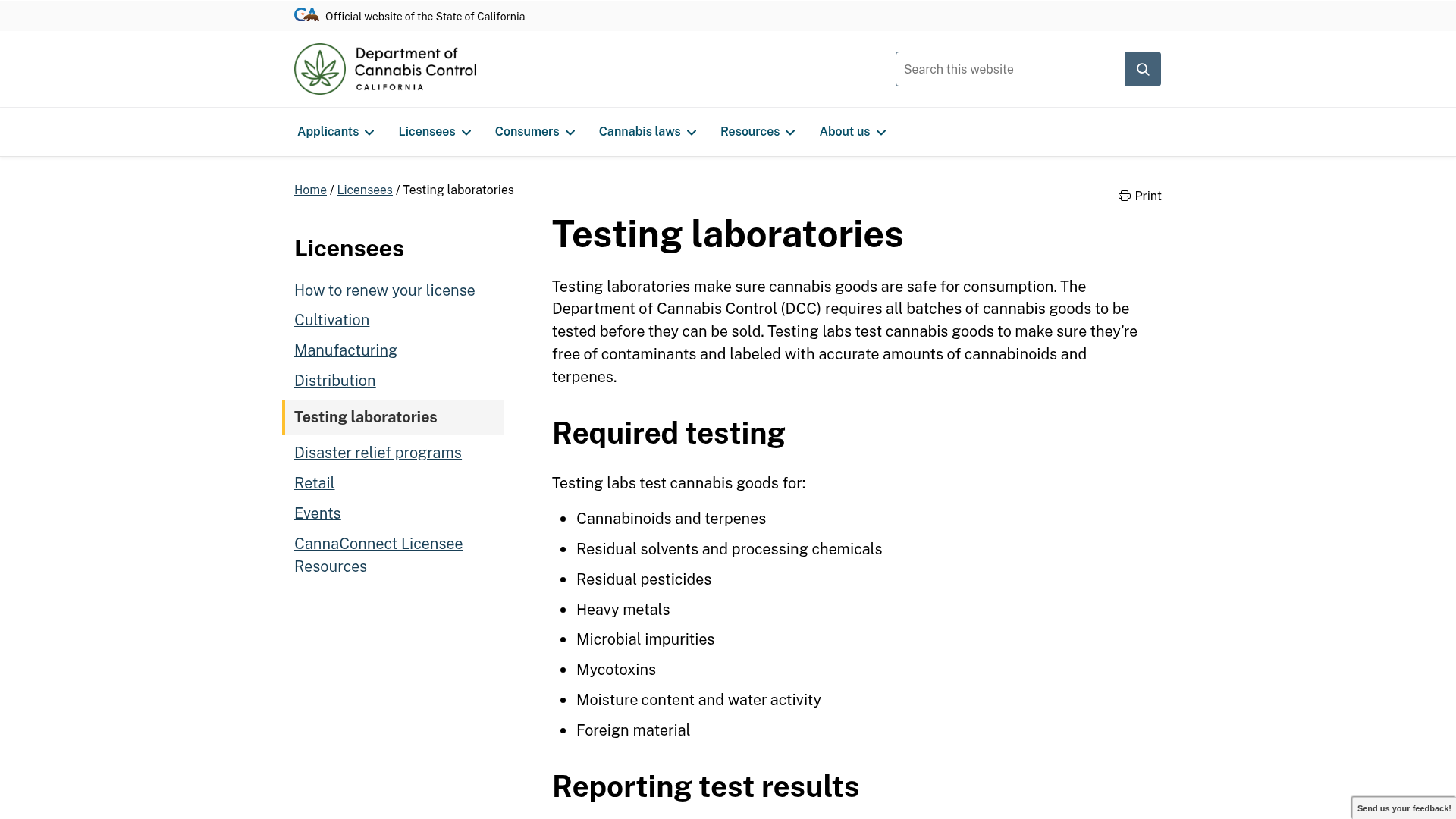
Current DCC testing-laboratories guidance shows the state still treats lab controls as a core consumer-protection issue. All batches must be tested before sale, results are reported on a COA, and failed batches can only be destroyed or remediated and retested before they return to market.
The same guidance also requires licensed testing laboratories to maintain ISO/IEC 17025 accreditation, use standard operating procedures, develop a laboratory quality assurance program, and participate in a proficiency testing program.
DCC controls we verified
- Required batch testing before sale
- Certificates of Analysis issued after all testing is complete
- One-day reporting of results into track and trace and to DCC
- Failed goods must be destroyed or remediated and retested
That does not mean every product on the market is unreliable. It does mean California’s current regulatory framework still depends on disciplined testing, documentation, and retesting controls that buyers should treat seriously.
3. What we removed because it was not source-verified
- The earlier “800% recall increase” claim
- Specific 2025 quarterly recall totals
- The Colorado pesticide-comparison figure
- The AB 1826 and AB 1027 references from the prior draft
- The earlier “$534 million seized” statement
Those statements may appear in secondary summaries, but we did not keep them on this page without direct primary-source support.
4. What buyers and operators should watch now
- New DCC embargoes and recalls
- Whether a brand can explain its testing, sampling, and remediation process clearly
- Whether public potency or purity claims are matched by consistent public documentation
- Whether a supplier responds to compliance questions with specifics instead of generic marketing language
For operators, the practical implication is simple: over-document testing and compliance rather than relying on a generic “licensed means solved” narrative.
5. Bottom line
California’s legal market has more oversight than the illicit market, but the official record still shows meaningful product-removal volume and unresolved testing-control questions.
That is enough to justify supplier vetting. It is not enough to justify inflated statistics, unsupported bill summaries, or universal brand claims. This page now reflects that narrower and higher-confidence standard.
Sources checked March 31, 2026
- California Department of Cannabis Control consumer-protection announcement — 2024 embargo and recall figures
- DCC testing laboratories guidance — required testing, COAs, proficiency testing, remediation, and reliability controls
- California cannabis recalls portal — current recall records and notice format
If you operate a cannabis brand or supplier and want us to review your public profile, use the supplier intake page.
If you want the editorial standards behind this page, review the methodology, editorial standards, and corrections policy.